
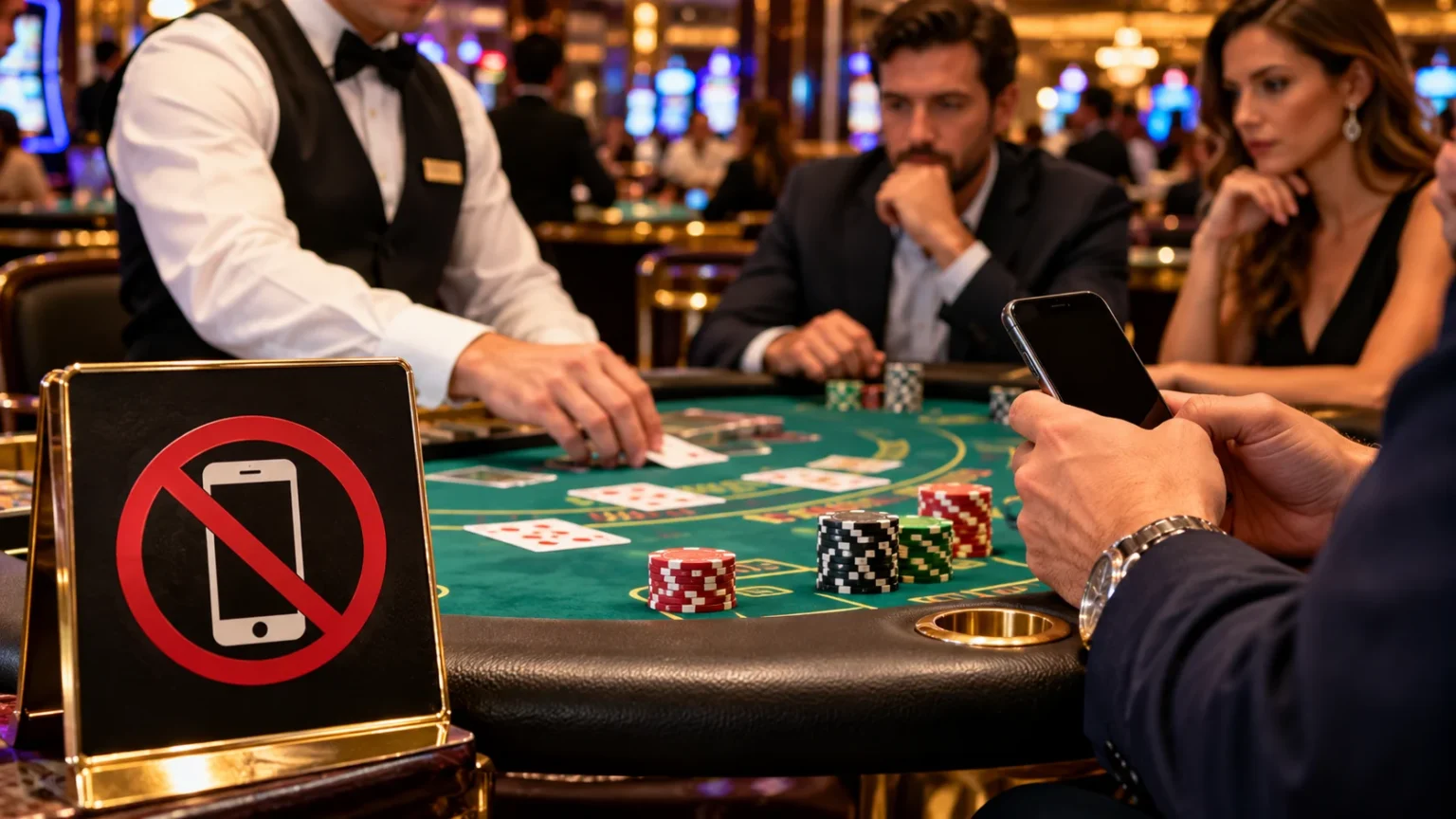
Casinos are carefully managed entertainment environments where security, fairness, and smooth operations are important. Visitors may notice that using mobile phones at gaming tables is restricted or sometimes completely prohibited. These rules can seem unusual, especially when smartphones have become an essential part of everyday communication, photography, and entertainment.
However, casino phone restrictions serve several practical purposes beyond simply controlling distractions. Gaming establishments use these policies to protect player privacy, prevent unauthorized recording, reduce the risk of cheating, and maintain an organized environment. Understanding why casinos restrict phone use at gaming tables helps visitors recognize the reasoning behind these rules and avoid unnecessary misunderstandings.
Why Do Casinos Restrict Phone Use at Gaming Tables?
Casinos restrict mobile phone use at gaming tables primarily to maintain security, protect gaming integrity, and support orderly operations. Table games involve money, strict procedures, and constant interaction between dealers and participants. Allowing unrestricted phone activity could create unnecessary distractions, interfere with surveillance, or raise concerns about unauthorized communication during gameplay and important gaming decisions.
Different gambling establishments maintain their own rules regarding mobile devices, which means restrictions can vary significantly between locations. Some casinos prohibit all phone use while actively participating in table games, whereas others only restrict calls, photography, and recording. These differences often depend on internal security policies, local gaming regulations, and the specific activities taking place.
Phone restrictions also help casino employees identify unusual behavior without having to distinguish ordinary device use from potentially suspicious activity. Clear policies create consistent expectations for visitors and staff members. When everyone understands when mobile devices are permitted, casinos can maintain a more controlled gaming environment while reducing disputes about acceptable behavior.
Preventing Cheating and Unfair Advantages
One important reason casinos limit phone use is to reduce opportunities for cheating or obtaining unauthorized assistance. Smartphones provide access to messaging applications, calculators, cameras, and real-time communication tools. Although many people use these features for harmless purposes, unrestricted access during certain games can create security concerns that casino operators must take seriously.
Some table games require participants to make decisions without receiving assistance that violates casino rules or applicable regulations. Using a phone to communicate with someone outside the gaming area may raise questions about unauthorized cooperation. Restrictions help employees enforce consistent procedures without having to examine every message, application, or conversation taking place during a game.
These measures do not mean that everyone using a smartphone intends to gain an unfair advantage. Instead, casinos establish general rules to reduce risks and simplify enforcement. Limiting phone activity allows dealers and security personnel to focus on maintaining fair procedures rather than investigating every instance of device use.
Protecting Player Privacy and Personal Information
Privacy is another significant reason for restricting smartphones around casino gaming tables. Some visitors prefer to keep their entertainment activities private and may not want photographs or videos showing their presence. Unrestricted recording could unintentionally capture identifiable faces, personal conversations, or other information that guests have not agreed to share publicly.
Modern smartphones make it easy to record high-quality videos or broadcast live footage within seconds. A visitor filming a gaming table might accidentally include other players, casino employees, or private interactions in the recording. Restrictions on photography and video recording help reduce unwanted exposure while respecting the privacy expectations of people sharing the gaming environment.
Casino privacy policies may also protect sensitive operational information and activities occurring around the gaming floor. Even when recording is permitted in designated areas, table games often have stricter requirements. Visitors should check the establishment’s rules and obtain permission before taking photographs or recording footage near active gaming tables.
Maintaining Security and Surveillance Effectiveness
Casino security departments rely on surveillance systems, trained employees, and established procedures to monitor activities throughout gaming areas. Clear visibility of table surfaces, playing cards, chips, and participant interactions helps staff identify irregularities. Frequent phone handling can make routine observations more complicated, particularly when devices obstruct important areas or distract individuals during gameplay.
Mobile phones may also interfere with the ability of dealers and supervisors to recognize whether participants are following established table procedures. A player repeatedly looking down at a device could create uncertainty about their attention or actions. Restricting phone use reduces unnecessary ambiguity and allows security teams to concentrate on relevant activity rather than ordinary digital communication.
Surveillance policies are designed to protect the gaming environment rather than assume that every visitor represents a security risk. Consistent phone rules make monitoring easier for employees and create clearer boundaries for acceptable behavior. These measures support accountability while helping casinos respond more effectively when genuine security concerns arise.
Reducing Distractions During Table Games
Casino table games often depend on participants following instructions, recognizing when their turn arrives, and responding within a reasonable time. Mobile phone notifications, calls, and messages can interrupt this process. Someone concentrating on a conversation may overlook the dealer’s instructions or delay routine actions, creating inconvenience for other people participating at the same table.
Distractions can also cause misunderstandings about gaming procedures, especially when participants are unfamiliar with a particular game. A visitor checking social media may miss information about the current round or misunderstand when certain actions are allowed. Restricting phones encourages greater attention to the activity taking place and helps reduce avoidable interruptions.
An organized table environment benefits both visitors and employees because everyone can follow the same sequence of actions. Dealers are generally responsible for managing games according to established procedures and cannot constantly accommodate unrelated phone activity. Limiting device use supports smoother communication, although participants should still feel comfortable asking questions whenever instructions are unclear.
Protecting the Integrity of Casino Table Games
Gaming integrity refers to maintaining consistent procedures and ensuring that games operate according to established rules. Casinos must protect this integrity to maintain their operating standards and meet applicable regulatory requirements. Mobile phone restrictions form one part of a broader approach that can include dealer supervision, surveillance, equipment inspections, and internal security controls.
Games such as blackjack, roulette, baccarat, and poker involve different procedures, participant interactions, and security considerations. Because of these differences, a casino may apply stricter phone policies to certain tables than others. The purpose is generally to establish clear boundaries around communication, recording, and device handling during activities requiring close supervision.
Maintaining integrity also involves treating participants consistently and communicating expectations before problems occur. Written policies and verbal reminders help visitors understand the rules without unnecessary confrontation. When phone restrictions are clearly explained and fairly applied, they can contribute to a more transparent and professionally managed gaming environment.
Why Phone Restrictions Differ Between Casino Games
Not every casino game presents the same operational or security concerns, which explains why mobile phone rules sometimes vary. Some table games involve decisions, shared information, or interactions between multiple participants. Casino operators consider these characteristics when determining whether phones should be prohibited entirely or restricted only during particular stages of gameplay.
Poker rooms may establish specific policies regarding communication devices, photography, and electronic assistance while a hand is in progress. Blackjack tables may restrict active phone use because of concerns about distractions or unauthorized assistance. Roulette areas can have different requirements depending on the establishment’s procedures, staffing arrangements, and approach to electronic devices.
Visitors should never assume that permission to use a phone in one gaming area automatically applies throughout the casino. Rules can differ between slot machine sections, live dealer tables, tournament rooms, and private gaming areas. Checking the posted policy or asking an employee is the most reliable way to understand what is permitted.
How Mobile Phones Can Interfere With Casino Operations
Casinos depend on organized workflows to manage table games, customer service, surveillance, and employee responsibilities. Mobile phone interruptions can interfere with these workflows when participants pause repeatedly to answer calls or respond to messages. Even short interruptions may become disruptive when several people are waiting for the same game to continue.
Dealers must follow procedures carefully while communicating with participants and maintaining accurate control of game equipment. Unexpected interruptions can make their work more difficult, particularly during busy periods or complex table situations. Phone restrictions help create predictable working conditions and allow employees to concentrate on their responsibilities without unnecessary distractions from electronic devices.
Casino operators also consider how phone activity affects surrounding guests, not only the person holding the device. Loud conversations, repeated notifications, and prolonged recording can disturb others who expect an organized atmosphere. Managing device use therefore becomes part of the establishment’s wider customer service and operational standards.
Casino Phone Rules and Responsible Communication
Although casinos may restrict phones at gaming tables, most establishments recognize that guests sometimes need to communicate with family members, colleagues, or other contacts. Policies often allow visitors to step away from the gaming area when they need to make calls or respond to important messages. The exact arrangements depend on the property’s rules.
If a visitor expects an important call, checking the casino’s communication policy before joining a table can prevent inconvenience. It may be appropriate to inform the dealer that a short break is needed before leaving the gaming position. Following the establishment’s established procedures helps avoid confusion and ensures that communication does not interrupt ongoing activities.
Phone restrictions should not prevent anyone from seeking assistance or responding to an urgent personal situation. Employees can explain where visitors may safely use their devices or contact someone when necessary. Understanding these options helps guests balance their communication needs with the rules governing the gaming environment.
What Happens If You Use a Phone at a Gaming Table?
The consequences of using a phone at a casino gaming table depend on the establishment’s policies and the circumstances involved. In many situations, an employee may simply remind the visitor to put the device away. A first-time misunderstanding is often handled through a straightforward explanation rather than an immediate severe response.
Repeated violations or refusal to follow staff instructions may lead to stronger action under the casino’s house rules. Depending on the situation, a participant could be asked to stop playing, leave a particular gaming area, or exit the property. Serious misconduct involving prohibited recording or suspected cheating may receive additional scrutiny from security personnel.
Visitors can avoid most problems by following posted notices and responding respectfully when employees explain phone restrictions. If a rule seems unclear, asking for clarification is more effective than assuming that it does not apply. Policies are not identical everywhere, so understanding the specific establishment’s requirements is important before using a device.
Are Casino Phone Restrictions Required by Law?
Casino phone restrictions are not governed by one universal rule that applies to every gambling establishment worldwide. Legal requirements vary between countries, states, provinces, and individual gaming jurisdictions. Some restrictions are based on specific regulatory obligations, while others come from internal casino policies designed to address security, privacy, and operational concerns.
Gaming regulators may establish standards for surveillance, approved equipment, electronic assistance, and the conduct of certain games. Casinos may then introduce additional device restrictions to support their compliance procedures and security practices. However, a casino’s decision to prohibit phones at a particular table does not automatically mean that the prohibition is specifically required by law.
Visitors should distinguish between legal requirements and house rules when trying to understand a restriction. Even where a particular phone policy is not mandated by legislation, the establishment may still enforce it as a condition of entry or participation. Staff members can usually explain the applicable policy or direct visitors toward official guidance.
Why Casinos Restrict Photography and Video Recording
Photography and video recording raise concerns that go beyond ordinary phone conversations or text messages. Cameras may capture other visitors without permission, interfere with privacy expectations, or record sensitive activities taking place on the gaming floor. For these reasons, casinos frequently establish separate rules governing photographs, videos, livestreaming, and other recording activities.
A person taking a harmless picture of a gaming table might unintentionally include employees, identifiable visitors, or restricted operational areas. Livestreaming can create additional concerns because footage may be distributed immediately to a large audience. Casinos may therefore require prior approval for filming, particularly when recording occurs near active table games or supervised gaming equipment.
Photography policies can still differ considerably between establishments and even between areas within the same property. Decorative spaces, restaurants, and entertainment venues may have more flexible rules than gaming floors. Before using a camera, visitors should confirm whether recording is allowed and respect requests to stop filming when necessary.
How Casinos Balance Security and Guest Experience
Casino operators must balance security requirements with the expectations of guests who regularly use smartphones in everyday life. Completely prohibiting mobile devices throughout a property may be inconvenient for visitors who rely on them for communication, navigation, or other routine activities. As a result, many establishments focus restrictions on sensitive gaming areas rather than every public space.
Clear communication helps make these policies easier to understand and follow. Signs near gaming tables, explanations from dealers, and information provided by customer service employees can reduce uncertainty. When restrictions are presented consistently, visitors are more likely to recognize that the rules support operational needs rather than being arbitrary limitations.
Guest experience also improves when rules are applied respectfully and without unnecessary confrontation. Casino staff can explain where phone use is permitted and suggest appropriate alternatives for urgent communication. A balanced approach protects the gaming environment while recognizing that visitors may have reasonable personal needs during their time at the establishment.
Understanding Casino Etiquette Around Mobile Phones
Casino etiquette includes respecting posted policies, following staff instructions, and considering how personal behavior affects other visitors. Mobile phone etiquette is part of these expectations because calls, photographs, and notifications can disturb shared spaces. Understanding the rules before approaching a gaming table helps prevent misunderstandings and supports a respectful atmosphere for everyone.
Visitors should keep their devices away when an establishment prohibits phone use during table games. If communication becomes necessary, they can ask an employee about stepping away or using a designated area. It is also important to avoid photographing other visitors or casino personnel without permission, even when recording restrictions are not immediately visible.
Good etiquette involves being considerate rather than simply avoiding formal rule violations. Keeping conversations quiet, listening to instructions, and respecting personal privacy can make shared entertainment spaces more comfortable. These principles apply beyond casinos and help explain why many public venues establish practical guidelines for smartphone use.
Common Misunderstandings About Casino Phone Policies
A common misunderstanding is that casinos prohibit phones because they assume every visitor intends to cheat. In reality, restrictions usually address several concerns simultaneously, including privacy, supervision, distractions, and operational consistency. Most smartphone users have ordinary communication needs, but general policies allow establishments to manage risks without assessing every individual’s intentions.
Another misconception is that all casino properties enforce exactly the same mobile phone rules. Policies can vary between gaming jurisdictions, operators, and specific sections of a casino. A visitor who previously used a phone near one table may discover that another establishment has stricter requirements, even when the games appear similar.
Some people also believe that photography is acceptable whenever no visible sign prohibits it. However, recording policies may apply through general property rules or instructions provided by employees. Asking permission before filming and checking local requirements can prevent misunderstandings while protecting the privacy and comfort of people nearby.
Conclusion
Casinos restrict phone use at gaming tables for several important reasons, including protecting security, maintaining gaming integrity, and reducing unnecessary distractions. These rules also help safeguard visitor privacy and support the procedures that employees must follow during supervised table games. Although restrictions may initially seem inconvenient, they serve practical purposes within a carefully managed entertainment environment.
The exact policies depend on the casino, gaming jurisdiction, and type of activity taking place. Some establishments allow limited device use, while others prohibit phones entirely during active table games. Understanding these differences helps visitors follow the applicable rules without assuming that every casino operates under identical requirements.
Visitors can avoid confusion by checking posted policies, respecting staff instructions, and stepping away when they need to communicate. Following reasonable mobile phone etiquette contributes to a more comfortable environment for employees and guests. Knowing why casinos restrict phone use at gaming tables makes these policies easier to understand and navigate responsibly.
Frequently Asked Questions (FAQs)
Why are phones not allowed at casino tables?
Casinos may restrict phones to prevent unauthorized assistance, protect player privacy, and reduce distractions. These policies also help security personnel supervise gaming activities and maintain consistent operational procedures.
Can you text while sitting at a casino gaming table?
It depends on the casino’s rules and the type of game. Some establishments allow limited texting between rounds, while others require guests to put their phones away or step outside the gaming area.
Are you allowed to take pictures inside a casino?
Some casinos permit photography in designated public areas but restrict recording near gaming tables. Visitors should check the property’s rules and obtain permission before photographing other guests, employees, or active games.
Can casinos ask you to leave for using your phone?
Yes, casinos can enforce their house rules and may ask visitors to stop using a phone, leave a gaming area, or exit the property for repeated violations, subject to applicable laws.
Do casino phone restrictions apply to all games?
No, restrictions vary depending on the establishment, gaming regulations, and type of activity. Poker, blackjack, roulette, and other table games may have different policies regarding calls, texting, recording, and electronic assistance.