
Understanding Casino Emergency Planning and Its Importance
Casino emergency planning is the process of preparing for unexpected situations that could threaten the safety of guests, employees, and property. Casinos are busy entertainment venues with gaming floors, restaurants, hotels, and other public facilities. These environments require clear safety procedures because emergencies can develop quickly. A well-organized emergency plan helps staff respond appropriately while reducing confusion and unnecessary risks.
Emergency preparedness involves identifying potential hazards, assigning responsibilities, and establishing practical response procedures. Common concerns include fires, medical incidents, severe weather, power failures, and building evacuations. Each situation requires specific actions to protect people and maintain communication. Casino operators must consider the layout of their facilities, local regulations, and the needs of different visitors.
Effective planning also supports business continuity and long-term operational stability. When employees understand their responsibilities, they can respond more calmly and coordinate with emergency services. Clear procedures help management make informed decisions during uncertain situations. Although emergencies cannot always be prevented, careful preparation can reduce their impact and improve overall casino safety.
Why Emergency Procedures Matter in Casino Operations
Emergency procedures establish clear expectations for handling unexpected incidents across different casino departments. Without documented guidelines, employees may respond inconsistently or overlook important safety responsibilities. In crowded environments, confusion can delay assistance and create additional hazards. Standard operating procedures provide a structured foundation for managing incidents while protecting guests and employees.
Casinos often operate continuously, which makes emergency readiness especially important during overnight shifts and busy periods. Different teams may be responsible for gaming operations, hospitality, maintenance, and facility security. Each department needs to understand how its actions support the broader emergency response. Coordinated procedures reduce duplicated efforts and help essential information reach the appropriate personnel.
Reliable emergency planning also demonstrates a commitment to responsible facility management. Guests expect entertainment venues to maintain reasonable safety standards and respond professionally when problems occur. Employees benefit from knowing that established procedures support their decisions. By prioritizing preparedness, casino operators can improve workplace confidence, strengthen operational resilience, and support public trust.
Identifying Common Emergencies in Casino Environments
Casinos face various emergency situations because they combine large public spaces with complex building systems. Fire hazards, medical incidents, severe weather, and electrical failures can disrupt normal activities. Crowded entrances and entertainment areas may complicate movement during an evacuation. Identifying these risks allows management to develop suitable prevention measures and response procedures.
Medical emergencies deserve particular attention because casinos attract visitors with different ages, health conditions, and accessibility needs. Employees may encounter guests experiencing sudden illness, injuries, or other situations requiring urgent assistance. Clear reporting procedures and access to trained personnel can improve response coordination. Staff should understand when to contact emergency medical services rather than attempting treatment beyond their training.
Environmental and infrastructure emergencies also require careful consideration during safety planning. Flooding, storms, earthquakes, and utility disruptions may affect building access or essential services. Risks differ depending on the casino’s geographic location and facility design. Regular hazard assessments help operators prioritize realistic threats and avoid relying on generic procedures that may not address local conditions.
Conducting a Thorough Casino Risk Assessment
A casino risk assessment identifies potential hazards and evaluates their likelihood and possible consequences. This process should examine gaming floors, guest accommodations, restaurants, parking areas, and employee-only spaces. Management must also consider equipment reliability, building accessibility, and emergency communication systems. A comprehensive assessment helps establish priorities for preventive maintenance and emergency preparedness investments.
Risk evaluations should involve representatives from departments that understand different operational challenges. Facility maintenance teams can identify infrastructure concerns, while hospitality employees may recognize issues affecting guest movement. Security personnel can contribute insights into incident reporting and public safety coordination. Combining these perspectives produces a more complete understanding of the facility’s emergency planning requirements.
Risk assessments should be reviewed regularly rather than treated as one-time administrative tasks. Building renovations, staffing changes, and new entertainment facilities may introduce additional hazards. Previous incidents and emergency exercises can also reveal areas requiring improvement. Updating the assessment helps casino management maintain practical procedures that reflect current conditions and operational needs.
Developing a Comprehensive Casino Emergency Response Plan
A casino emergency response plan explains how employees should act when a serious incident occurs. It should outline response priorities, communication responsibilities, evacuation arrangements, and coordination with emergency services. The document must be understandable and accessible to authorized employees. Clear instructions allow teams to respond consistently instead of improvising during stressful situations.
Effective emergency plans establish different procedures for different types of incidents. A fire may require immediate evacuation, while severe weather could make remaining inside a designated safe area more appropriate. Medical incidents generally require rapid assistance and controlled access for emergency responders. Casino operators should develop these procedures with qualified safety professionals and relevant local authorities.
Every emergency plan should identify responsible personnel and their assigned duties. Managers need to understand who can initiate emergency notifications, request outside assistance, and coordinate department activities. Backup arrangements are necessary when designated employees are unavailable. By documenting these responsibilities, casinos can reduce uncertainty and support faster decision-making during unexpected incidents.
Establishing Clear Emergency Communication Systems
Communication is one of the most important elements of casino emergency preparedness. Employees must receive accurate information quickly so they can follow appropriate safety procedures. Guests also need clear instructions that explain what actions are necessary without creating unnecessary alarm. A reliable communication system helps prevent conflicting messages and supports an organized emergency response.
Casinos may use public address systems, employee radios, digital alerts, and other approved communication channels. These systems should be suitable for noisy gaming floors, hotel areas, and entertainment spaces. Accessibility is equally important because some visitors may have hearing, vision, or language-related communication needs. Using multiple communication methods helps reach a wider range of guests.
Communication procedures should also address coordination with local emergency response agencies. Designated employees must know how to report essential information and provide updates when circumstances change. Messages should remain accurate, concise, and consistent across departments. Regular testing helps identify equipment problems and ensures that personnel understand how to use communication systems appropriately.
Creating Safe and Effective Casino Evacuation Procedures
Casino evacuation procedures help occupants leave hazardous areas safely when remaining inside creates unacceptable risks. A successful evacuation plan considers building layouts, emergency exits, visitor movement, and designated assembly locations. Casinos often contain large interconnected spaces that can be unfamiliar to guests. Clearly marked routes and trained employees can make evacuation instructions easier to follow.
Evacuation arrangements should account for visitors who require additional assistance. Guests with mobility limitations, sensory disabilities, or other accessibility needs may require individualized support. Staff should understand approved assistance procedures and avoid making assumptions about a person’s capabilities. Accessible emergency planning helps ensure that safety measures consider the needs of everyone using the facility.
Regular inspections are essential for keeping evacuation routes usable during normal operations. Exits should remain unobstructed, emergency signs must be visible, and required lighting systems should function properly. Management should also review how construction work or temporary events affect building movement. These preventive measures help reduce avoidable delays during an actual evacuation.
Preparing Employees Through Emergency Response Training
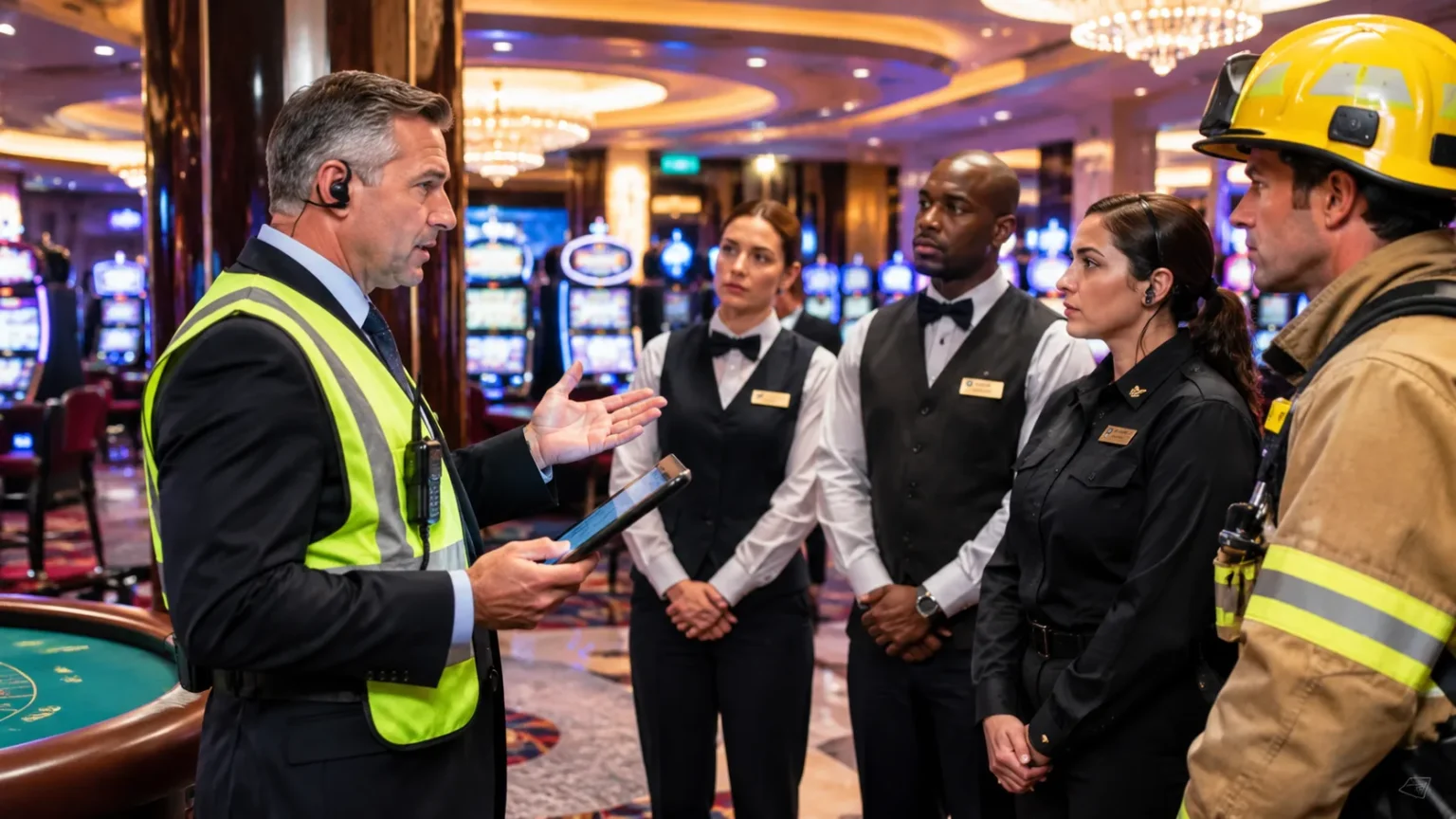
Employee training turns written emergency procedures into practical workplace knowledge. Even a detailed plan may be ineffective when workers cannot remember their responsibilities during an incident. Training should explain common hazards, reporting requirements, communication methods, and immediate safety priorities. Employees need clear guidance that matches their specific roles within the casino.
Different departments may require specialized instruction based on their daily responsibilities. Front desk employees often communicate directly with guests, while maintenance personnel understand essential building systems. Security teams may coordinate incident information and assist responding authorities. Role-specific training helps workers contribute appropriately without performing duties outside their qualifications or assigned responsibilities.
Emergency training should occur during onboarding and continue through scheduled refresher sessions. Staff turnover, operational changes, and updated procedures can make older training materials less useful. Supervisors should verify that employees understand essential instructions and know where to find current emergency guidance. Consistent education improves preparedness across day, evening, and overnight operations.
Conducting Emergency Drills and Practical Simulations
Emergency drills allow casinos to evaluate response procedures before a real incident occurs. Practice exercises help employees become familiar with communication expectations, assigned responsibilities, and approved movement routes. They also reveal weaknesses that may be difficult to identify through document reviews. A structured exercise provides opportunities for improvement without exposing participants to unnecessary danger.
Different exercises can evaluate different aspects of casino emergency planning. Tabletop discussions allow managers to review decisions and responsibilities through hypothetical situations. Supervised drills can test selected communication or evacuation procedures under controlled conditions. The appropriate exercise depends on local requirements, facility characteristics, and the safety objectives being evaluated.
After each exercise, supervisors should gather feedback and document important observations. Employees may identify unclear instructions, outdated contact details, or coordination problems between departments. Management can then revise procedures and schedule additional training when necessary. This review process turns emergency drills into meaningful opportunities for strengthening casino safety practices.
Understanding the Role of Casino Security Teams
Casino security teams contribute to emergency preparedness by supporting incident reporting, communication, and coordination. Their responsibilities should be defined within the broader facility emergency response plan. Security personnel may help guide guests, provide information to responders, and assist with approved protective measures. However, responsibilities must remain consistent with training, applicable law, and established workplace policies.
Security departments should work closely with hospitality, maintenance, and management teams. Emergency situations often involve multiple operational areas, making cooperation more effective than isolated responses. Clear reporting channels help staff share important information without unnecessary delays. Regular coordination also reduces confusion about which department is responsible for specific emergency tasks.
Security employees should receive appropriate instruction in professional communication and public safety responsibilities. Maintaining a calm and respectful approach is especially important when guests feel confused or frightened. Personnel should avoid actions that create additional risks or interfere with emergency professionals. Their primary contribution is supporting a safe, organized response within their authorized responsibilities.
Managing Medical Emergencies in Casinos
Medical emergency planning helps casino employees respond appropriately when visitors or coworkers require urgent healthcare assistance. Large entertainment venues may encounter unexpected illnesses, falls, or other incidents requiring professional evaluation. Employees should know how to recognize an emergency, contact appropriate responders, and provide accurate location information. Prompt communication can help qualified medical personnel reach affected individuals.
Casinos should identify where approved first-aid supplies and emergency equipment are located. Employees assigned to provide first aid should receive suitable training and follow current workplace policies. Other workers should focus on contacting emergency services, keeping access routes clear, and obtaining assistance. Medical treatment should remain within each employee’s competence and authorized responsibilities.
Privacy and dignity are also important considerations during medical incidents. Staff should avoid unnecessary discussions about a person’s condition or sharing sensitive information with unrelated parties. Incident documentation should follow applicable privacy requirements and organizational procedures. A respectful, coordinated response helps protect the affected individual while supporting appropriate follow-up after the emergency.
Preparing for Fire Hazards and Building Safety Incidents
Fire safety is a major consideration in casinos because buildings often contain extensive electrical systems, food preparation areas, and large public spaces. Effective prevention includes equipment maintenance, appropriate storage practices, and compliance with relevant fire safety standards. Employees should understand how to report suspected hazards promptly. Preventive action can reduce avoidable risks before emergencies develop.
Fire emergency procedures should establish when employees must notify emergency services and begin approved evacuation actions. Staff should never be expected to enter dangerous conditions or attempt tasks beyond their safety training. Fire detection equipment, alarms, and suppression systems require inspection according to applicable requirements. Reliable building systems support early warnings and safer emergency responses.
Casino operators should coordinate fire planning with qualified professionals and local fire authorities where appropriate. Building layouts, occupancy levels, and applicable regulations influence the specific measures required. Staff training should emphasize recognizing alarms and following authorized instructions. Regular reviews help keep fire procedures aligned with facility changes and current safety obligations.
Planning for Power Outages and Technology Disruptions
Power outages can affect casino operations because gaming environments depend on electricity for lighting, communication, and building services. Unexpected disruptions may create visibility problems or interfere with normal guest movement. Emergency procedures should prioritize occupant safety and essential building functions. Management needs a practical plan for communicating instructions while technical teams assess the situation.
Backup systems may support critical functions such as required emergency lighting and designated communication equipment. Their suitability depends on the building’s design, applicable regulations, and operational requirements. Maintenance personnel should inspect relevant equipment according to established schedules. Regular testing helps identify reliability concerns before an unexpected outage affects the facility.
Technology disruptions may also affect reservations, administrative systems, and other digital operations. Business continuity planning should identify essential services and establish suitable recovery priorities. Employees need guidance about which activities can continue safely and which should be suspended. Coordinated communication helps prevent confusion while authorized technical personnel address the disruption.
Coordinating With Local Emergency Response Authorities
Casino emergency planning becomes more effective when operators maintain appropriate relationships with local response agencies. Fire departments, emergency medical services, and other authorities may provide valuable guidance about facility preparedness. Understanding their expectations helps casinos develop realistic procedures. Early coordination can also improve familiarity with important building characteristics and access requirements.
Emergency response agencies may participate in planning discussions or approved training exercises when practical. These activities allow casino personnel to understand professional response priorities and communication expectations. Management can also identify information that responders may require during an incident. Cooperation should follow local rules and respect the responsibilities of each participating organization.
Contact information and coordination procedures should remain current as staff roles and agency arrangements change. Casinos should establish authorized points of contact for emergency planning and incident reporting. After significant incidents, appropriate reviews can identify opportunities to improve future cooperation. Maintaining professional relationships supports a more organized response when outside assistance becomes necessary.
Protecting Guests Through Accessible Emergency Preparedness
Guest safety should remain a central objective of every casino emergency plan. Visitors may be unfamiliar with the building, distracted by entertainment activities, or unsure how to respond to emergency announcements. Employees therefore need clear procedures for providing appropriate instructions. Effective guest communication helps people understand what to do without relying on technical knowledge.
Accessibility considerations should be included throughout emergency planning rather than addressed only after an incident occurs. Facilities may serve guests with different mobility, communication, and support needs. Emergency signs, announcements, and assistance arrangements should reflect applicable accessibility requirements. Planning for diverse needs supports safer responses and demonstrates respect for individual circumstances.
Guest-facing employees play a valuable role because they frequently provide the first instructions during unexpected disruptions. Training should help them communicate clearly, avoid speculation, and refer difficult situations to authorized personnel. Professional conduct can reduce confusion while emergency teams carry out their responsibilities. Thoughtful preparation contributes to a safer and more welcoming entertainment environment.
Maintaining Business Continuity After an Emergency
Business continuity planning explains how casinos can restore appropriate operations after an emergency. The immediate priority must always be protecting people and following directions from responsible authorities. Once conditions are safe, management can assess building damage, service disruptions, and operational limitations. A structured recovery process helps prevent rushed decisions that could create additional problems.
Recovery plans should identify essential business functions and the resources needed to restore them. These may include building services, employee communications, guest accommodations, and administrative operations. Some activities may resume quickly, while others require inspections or technical repairs. Clear recovery priorities help management allocate resources responsibly and communicate realistic expectations.
Documentation and post-incident reviews are important parts of the recovery process. Management should examine which procedures worked effectively and where improvements are necessary. Employee feedback and authorized reports can provide useful insights into operational challenges. Applying these lessons helps strengthen future preparedness while supporting safer and more reliable business operations.
Reviewing and Improving Casino Emergency Plans Regularly
Emergency planning requires ongoing attention because casino operations and facility conditions change over time. A procedure that worked previously may become less suitable after renovations, staffing changes, or new business activities. Scheduled reviews help management identify outdated information and unclear responsibilities. Keeping plans current is essential for maintaining practical emergency preparedness.
Review meetings should consider training records, equipment inspections, drill observations, and relevant incident reports. Supervisors can identify repeated concerns and recommend appropriate corrective actions. When procedures change, affected employees need clear communication and updated training materials. This process helps ensure that written policies remain consistent with actual workplace practices.
Continuous improvement should focus on meaningful safety outcomes rather than documentation alone. Management should verify that employees understand essential procedures and that relevant systems function as intended. Qualified professionals can assist with specialized assessments when necessary. A consistent review process helps casinos adapt to changing risks while maintaining responsible operational standards.
Conclusion
Casino emergency planning plays an essential role in protecting guests, employees, and facilities from unexpected situations. Clear procedures help organizations prepare for medical incidents, fires, evacuations, and infrastructure disruptions. Effective preparation also improves communication and supports coordinated decision-making. Although no plan can eliminate every risk, thoughtful procedures can reduce confusion and improve emergency responses.
Successful emergency preparedness depends on cooperation between management, employees, security personnel, and qualified response professionals. Regular risk assessments, staff training, and practical drills help transform written policies into useful workplace actions. Accessible communication and clearly assigned responsibilities are equally important. Together, these measures support a safer environment for everyone using casino facilities.
Casino operators should treat emergency planning as an ongoing responsibility rather than a one-time administrative requirement. Reviewing procedures, maintaining essential systems, and learning from previous exercises can strengthen organizational readiness. Safety should remain the highest priority during every emergency and recovery decision. A well-maintained emergency plan supports responsible operations, public confidence, and long-term business resilience.
Frequently Asked Questions
What Is Casino Emergency Planning?
Casino emergency planning involves identifying potential hazards and creating procedures for responding to unexpected incidents. It includes communication systems, employee responsibilities, evacuation arrangements, training, and coordination with emergency services.
Why Are Emergency Procedures Important in Casinos?
Emergency procedures help employees respond consistently to dangerous situations while protecting guests and coworkers. They reduce confusion, support communication, and establish clear responsibilities during incidents that disrupt normal casino operations.
What Types of Emergencies Should Casinos Prepare For?
Casinos should prepare for fires, medical emergencies, severe weather, power outages, and other relevant facility hazards. Specific priorities depend on local risks, building characteristics, operating conditions, and applicable safety requirements.
How Often Should Casino Emergency Plans Be Updated?
Casino emergency plans should be reviewed regularly and whenever significant operational changes occur. Updates may also be necessary after emergency drills, actual incidents, building renovations, or changes in applicable regulations.
Who Is Responsible for Casino Emergency Response Procedures?
Casino management is generally responsible for establishing emergency policies and assigning appropriate duties. Employees, security teams, maintenance personnel, and qualified emergency responders contribute according to their training, responsibilities, and applicable requirements.