

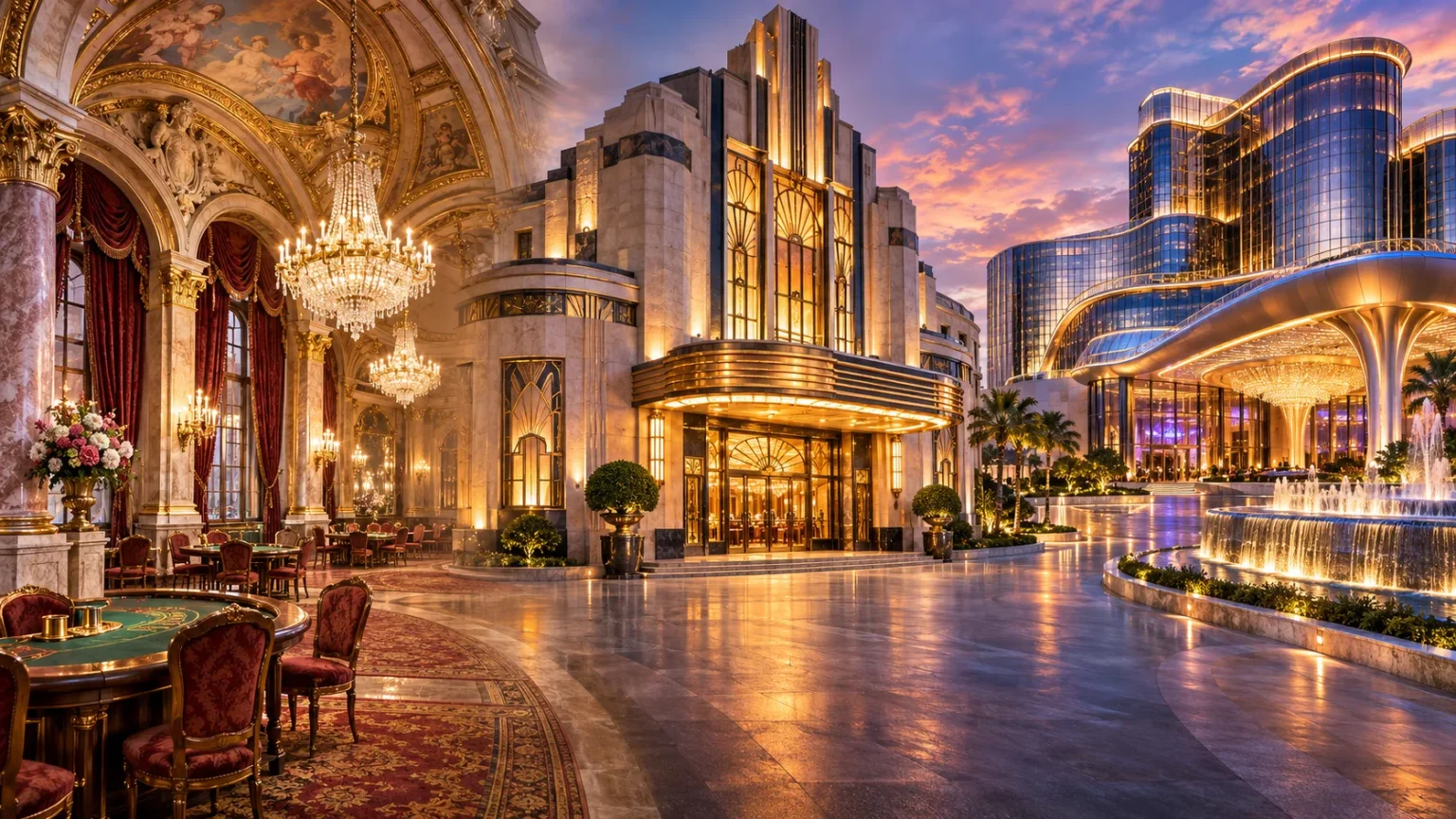
Have you ever looked at photographs of historic European casinos and wondered why they look so different from modern entertainment complexes? Some resemble royal palaces, while others feature enormous glass structures. Without understanding their history, these differences can seem confusing.
Exploring casino architecture history helps explain how these buildings changed alongside society. Cultural traditions, economic developments, architectural movements, and technological advances all influenced their appearance and construction.
From traditional European buildings to contemporary urban complexes, each period introduced something different. Understanding these changes provides a fascinating look at architectural history and the relationship between buildings and human behavior.
Where Did Casino Architecture History Begin?
Understanding the origins of casino buildings can be difficult because early structures looked nothing like their modern counterparts. They were often smaller establishments housed inside existing buildings rather than independently designed architectural complexes.
One important historical development occurred in Venice, Italy, in 1638. The Venetian government established the Ridotto inside Palazzo Dandolo as a regulated gambling establishment. It represents an early example of government involvement in recreational spaces.
The building reflected the architectural traditions of seventeenth-century Venice. Its interiors incorporated decorative elements commonly associated with wealthy European households, demonstrating how existing architectural styles influenced emerging building types.
These early establishments also reflected social divisions. Access and behavior were influenced by social customs, clothing requirements, and economic status. Architecture was closely connected to the cultural expectations of that period.
How European Architecture Shaped Early Casinos
When examining historical European buildings, it can be difficult to distinguish entertainment architecture from residential or governmental architecture. Many structures shared similar decorative features, construction materials, and interior arrangements.
During the eighteenth and nineteenth centuries, European casino buildings increasingly incorporated elements from established architectural movements. Neoclassical, Baroque, and Renaissance-inspired designs influenced their appearance in different regions.
Common architectural features included:
- Decorative columns and symmetrical entrances.
- Elaborate ceilings and ornamental plasterwork.
- Large windows and detailed stonework.
- Marble floors and handcrafted woodwork.
- Formal halls influenced by palace architecture.
These features reflected broader European artistic traditions. Similar architectural details appeared in theaters, concert halls, public buildings, and wealthy private residences.
Understanding these connections helps explain why historic casino buildings often resemble cultural institutions rather than modern commercial developments. Their architectural identity belonged to a much wider artistic movement.
The Influence of Nineteenth-Century Architecture
The nineteenth century introduced significant changes to European cities. Industrial development, railway expansion, and changing social customs influenced how architects approached public buildings and large entertainment facilities.
In Monaco, nineteenth-century architectural development reflected the decorative character of the Belle Époque period. French architect Charles Garnier contributed to the design of the Monte-Carlo opera house, which opened in 1879.
This architectural period placed considerable emphasis on craftsmanship. Artists, sculptors, architects, and skilled workers collaborated to produce detailed interiors that reflected the artistic standards of their time.
However, these buildings also represented significant economic inequality. Their elaborate construction contrasted sharply with the living conditions experienced by many ordinary people. Architectural history becomes more meaningful when these social differences are considered.
How American Architecture Changed the Traditional Style
European architectural traditions remained influential for centuries. However, the development of American cities introduced different construction methods, cultural preferences, and approaches to commercial architecture.
Nevada legalized gambling in 1931, marking an important turning point in American architectural history. During the following decades, Las Vegas developed a distinctive built environment influenced by highways, desert conditions, and population growth.
Early buildings were generally smaller than the enormous complexes that appeared later. Some incorporated Western themes, reflecting regional identity and popular interpretations of American frontier history.
By the mid-twentieth century, modern construction materials and engineering methods allowed architects to develop larger structures. Reinforced concrete, structural steel, and prefabricated building components contributed to this architectural transformation.
The Rise of Modernist Casino Architecture
Traditional architectural ornamentation gradually faced competition from modernism. Architects began questioning whether extensive decoration was necessary when buildings could communicate their identity through shape, structure, and materials.
Modernist architecture emphasized simpler forms, horizontal lines, geometric shapes, and functional construction. These characteristics appeared across many twentieth-century building types, including hotels, offices, theaters, and entertainment facilities.
Glass, steel, and concrete became increasingly important materials. Their availability allowed architects to explore wider interior spaces, larger windows, and alternative structural arrangements.
This transition represented a major departure from earlier European traditions. Instead of relying entirely on historical ornamentation, architects experimented with contemporary forms that reflected the industrial and technological developments of their time.
How Neon Lighting Transformed Architectural Identity
Buildings were traditionally recognized through their physical shape, materials, and decorative details. However, twentieth-century electrical technology introduced another dimension to architectural expression: artificial lighting.
During the mid-twentieth century, neon signage became a distinctive feature of the American commercial landscape. It appeared across hotels, restaurants, theaters, roadside businesses, and entertainment districts.
These illuminated signs eventually became important examples of graphic design and popular visual culture. Their lettering, colors, and geometric forms reflected changing artistic preferences and developments in electrical engineering.
Today, preserved neon signs provide valuable historical evidence. They help researchers understand how commercial architecture, typography, advertising, and urban identity developed together during the twentieth century.
The Architectural Shift Toward Larger Complexes
One challenge in understanding casino design evolution is recognizing when individual buildings became extensive multi-purpose developments. The transformation occurred gradually as construction technology and urban infrastructure expanded.
During the 1960s and 1970s, architect Martin Stern Jr. helped develop integrated building complexes in Las Vegas. His architectural work combined several different commercial and hospitality functions within larger structures.
These developments introduced complicated engineering requirements. Architects needed to consider structural stability, ventilation, fire protection, plumbing, electrical systems, and the maintenance of extensive building areas.
The emergence of these large complexes influenced surrounding cities as well. Roads, utility networks, transportation systems, and public services needed to accommodate developments that occupied considerably more space than earlier buildings.
How Postmodern Architecture Influenced Building Design
Modernist architecture often favored simplicity and rejected unnecessary decoration. However, some architects believed buildings should also reflect cultural symbolism, historical references, and the diversity of everyday life.
Postmodern architecture emerged partly in response to these concerns. It encouraged architects to reconsider historical styles, decorative elements, unconventional forms, and the symbolic meaning of buildings.
In 1972, Robert Venturi, Denise Scott Brown, and Steven Izenour published Learning from Las Vegas. Their research examined commercial architecture and challenged conventional assumptions about architectural significance.
The publication became influential within architectural education. It demonstrated that ordinary commercial landscapes could provide valuable insights into urban development, visual communication, cultural identity, and the changing relationship between architecture and society.
The Emergence of Themed Architecture
During the late twentieth century, some large commercial buildings began incorporating recognizable historical and cultural references. This architectural approach became known as themed architecture.
Designs borrowed elements from ancient civilizations, European cities, historical monuments, and popular culture. However, these structures were modern interpretations rather than historically accurate reproductions of their architectural sources.
This distinction is important because decorative imitation can create confusion about architectural authenticity. A contemporary building that resembles a Renaissance structure does not necessarily use traditional Renaissance construction techniques or materials.
Themed architecture also generated debate among architectural historians. Some regarded it as an interesting expression of postmodern culture, while others questioned its historical accuracy and relationship with local architectural identity.
How Casino Architecture Evolved Across Different Regions
Architectural development did not follow an identical path in every country. Local regulations, cultural traditions, economic conditions, available land, and construction practices created significant regional differences.
European developments frequently reflected established architectural traditions and historic urban environments. American developments were more strongly influenced by highway expansion, twentieth-century commercial design, and large-scale construction.
In Macau, extensive development and land reclamation transformed parts of the urban landscape during the early twenty-first century. These changes introduced questions about infrastructure, architectural identity, environmental protection, and the preservation of historic neighborhoods.
Comparing different regions helps explain why casino architecture cannot be defined by a single style. Its development reflects the specific historical, political, and economic circumstances of each location.
Traditional vs. Modern Casino Architecture
Historic and contemporary buildings can appear completely unrelated at first glance. However, comparing their architectural characteristics reveals how construction practices, artistic movements, and urban requirements changed over time.
| Architectural Feature | Traditional Architecture | Modern Architecture |
|---|---|---|
| Building materials | Marble, wood, and stone | Glass, steel, and concrete |
| Design influences | Classical European styles | Contemporary architectural movements |
| Building scale | Relatively smaller structures | Extensive building complexes |
| Decorative features | Sculptures and ornamental ceilings | Geometric and contemporary forms |
| Construction methods | Traditional craftsmanship | Advanced engineering systems |
| Building technology | Limited mechanical systems | Integrated digital systems |
| Environmental considerations | Historically less standardized | Increasing sustainability requirements |
Neither architectural category represents a single universal style. Traditional buildings differed considerably across countries, just as contemporary architecture varies according to regional conditions and available resources.
The comparison demonstrates how architecture responds to changing circumstances. Materials, engineering capabilities, environmental standards, and cultural preferences continue to influence the buildings produced during each historical period.
How Technology Changed Casino Building Construction
Constructing large commercial buildings presents challenges that were unfamiliar to architects working several centuries ago. Modern structures require extensive coordination between architects, engineers, construction workers, and building management specialists.
Computer-aided design and building information modeling have changed architectural planning. These technologies allow professionals to examine structural components, identify potential conflicts, and coordinate complex construction projects before physical work begins.
Modern engineering also supports improved fire protection, accessibility, ventilation, and energy management. These systems are essential for maintaining safer and more functional large-scale buildings.
The influence of technology extends beyond exterior appearance. Many of the most significant architectural developments involve systems that are hidden behind walls, beneath floors, and within mechanical infrastructure.
Sustainability in Modern Casino Architecture
Large commercial buildings can consume considerable amounts of energy and water. Extensive construction can also affect surrounding ecosystems, transportation networks, and local infrastructure.
Modern architectural practices increasingly address these challenges through environmental assessments, improved insulation, efficient mechanical systems, and more responsible construction materials.
Important sustainability considerations include:
- Reducing unnecessary energy consumption.
- Improving water management and conservation.
- Selecting durable construction materials.
- Reducing construction and demolition waste.
- Protecting surrounding natural environments.
However, sustainability claims require careful evaluation. A building with environmentally friendly features can still have a substantial overall environmental footprint because of its size, resource demands, and construction requirements.
The Social Impact of Casino Architecture on Cities
Architectural history becomes incomplete when it focuses only on buildings and ignores surrounding communities. Large commercial developments can influence employment, housing, public infrastructure, and neighborhood identity.
Atlantic City provides a historical example. Following changes to gambling regulations in the 1970s, extensive redevelopment reshaped parts of the city’s built environment, particularly around its waterfront and established tourist areas.
However, architectural redevelopment did not automatically resolve existing social and economic problems. Researchers have examined the relationship between commercial investment, neighborhood inequality, land speculation, and uneven urban development.
These historical examples highlight an important principle. Architectural development should be evaluated through its effects on people and communities, not simply through the appearance or size of individual buildings.
Why Preserving Historic Casino Architecture Matters
Older commercial buildings are sometimes demolished when construction standards, economic conditions, or redevelopment priorities change. Unfortunately, demolition can permanently remove valuable evidence of architectural history.
Historic photographs, building plans, decorative objects, and preserved architectural elements help researchers document these changes. They provide information about traditional craftsmanship, construction methods, and artistic movements that might otherwise be forgotten.
Architectural preservation does not require endorsing the original purpose of a building. A historic structure can be studied for its cultural significance, engineering characteristics, and relationship with the surrounding community.
Museums, historical societies, and architectural archives play important roles in this process. Their collections allow people to explore architectural history while developing a better understanding of how cities have changed over generations.
What Does the Future of Entertainment Architecture Look Like?
Predicting future architectural developments is difficult because construction practices constantly respond to technological, environmental, economic, and social changes. Nevertheless, several broader architectural priorities are becoming increasingly important.
Accessibility, public safety, environmental responsibility, and transparent building layouts deserve greater attention. Architects must consider how commercial environments affect different groups of people, including those vulnerable to gambling-related harm.
Adaptive reuse may also become more important. Repurposing existing structures for cultural, educational, residential, or community purposes can preserve architectural heritage while reducing unnecessary demolition.
The future of large commercial architecture should ultimately be assessed through its contribution to environmental responsibility, community well-being, public safety, and long-term urban development.
Conclusion
Exploring casino architecture history reveals how buildings have changed alongside artistic movements, cultural traditions, economic developments, and technological progress. From seventeenth-century Venetian structures to modern commercial complexes, each period reflects different architectural priorities.
Understanding this evolution also means examining its wider consequences. Environmental demands, historical preservation, public safety, social inequality, and gambling-related harm are important considerations when evaluating these developments.
If you want to explore this subject further, start by comparing historical photographs, architectural drawings, and museum collections from different periods. You will develop a clearer understanding of how architecture reflects the changing values and challenges of society.
Frequently Asked Questions
When did casino architecture begin?
One important historical starting point was the establishment of the Ridotto in Venice in 1638. It occupied part of an existing building and reflected traditional European architectural practices.
What architectural styles influenced early casino buildings?
Baroque, Neoclassical, and Renaissance-inspired architecture influenced many historic European establishments. Decorative columns, ornamental ceilings, symmetrical layouts, and detailed craftsmanship were common features across these architectural traditions.
How did Las Vegas influence architectural history?
Las Vegas became an important subject of architectural research because of its commercial buildings, neon signage, postmodern design, and extensive urban development during the twentieth century.
What is the difference between traditional and modern casino architecture?
Traditional architecture often emphasized ornamentation and historical craftsmanship. Modern architecture generally incorporates contemporary construction materials, advanced engineering, integrated building systems, and larger structural developments.
Why is studying casino architecture history important?
Studying these buildings helps explain changes in architectural movements, engineering, cultural identity, and urban planning. It also encourages critical examination of environmental consequences and the social impact of commercial development.