

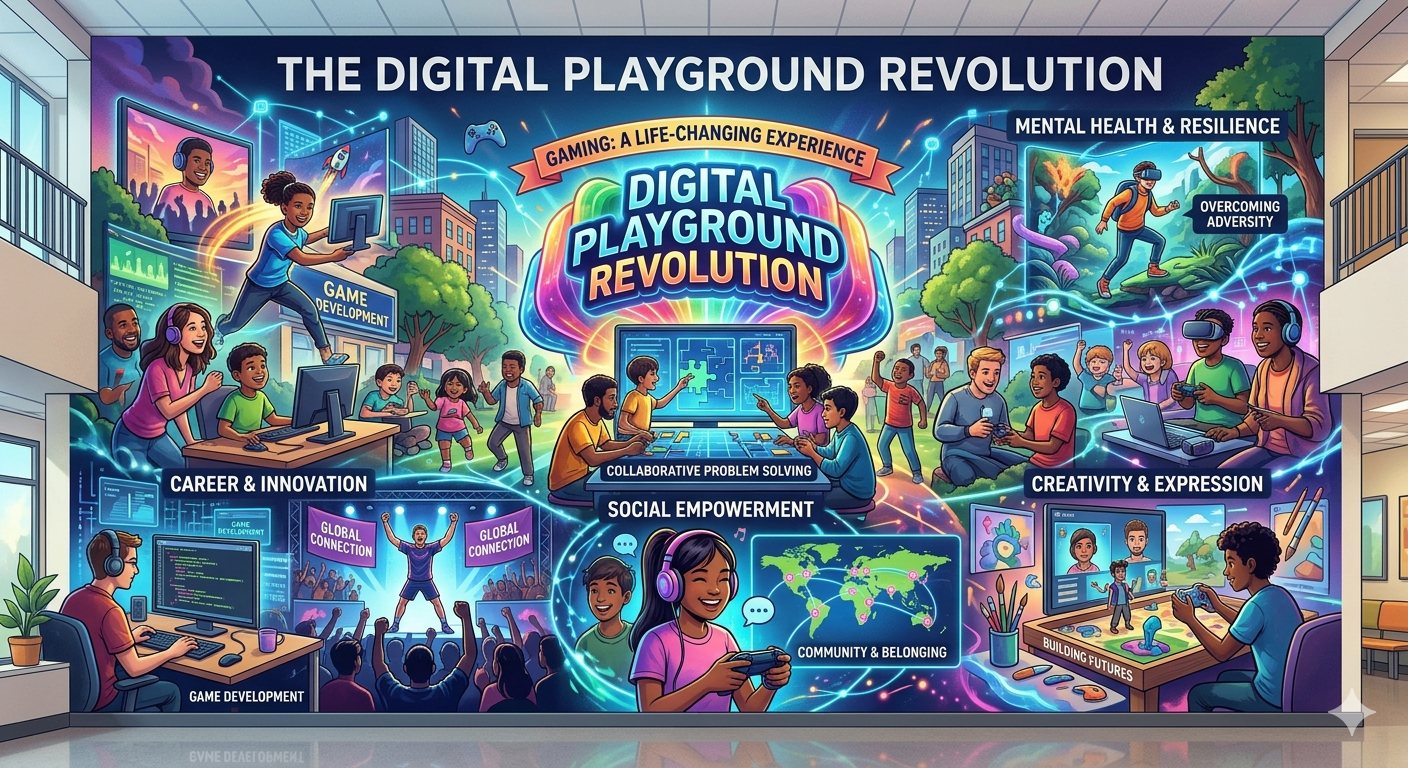
A few decades ago, video games were considered a small form of entertainment enjoyed mostly by children in arcades or at home after school. Today, gaming has evolved into something much larger and far more meaningful. It is now a global phenomenon that influences technology, communication, education, business, and even human behavior. Gaming is no longer just about winning points or completing levels—it has become an important part of modern life.
Across the world, billions of people play games on smartphones, computers, consoles, and tablets. Some enjoy gaming casually to relax, while others compete professionally before massive online audiences. Regardless of age or background, gaming has created a universal digital culture that connects people in ways never imagined before.
One of the greatest strengths of gaming is its ability to engage the human mind. Unlike passive entertainment, games require participation. Players are constantly making decisions, solving problems, planning strategies, and reacting to unexpected situations. This active involvement helps improve mental sharpness and encourages faster thinking.
Many games challenge memory, concentration, and creativity. Puzzle-based games train the brain to identify patterns and think logically. Adventure games encourage exploration and curiosity, while simulation games develop planning and management skills. Even racing and sports games improve coordination and reaction speed.
Gaming also teaches an important lesson about persistence. In most games, failure is part of the experience. Players may lose multiple times before succeeding, but they continue trying until they improve. This process develops determination and patience. It shows people that success often comes through practice and effort, a lesson that can be applied in real life.
Another important aspect of gaming is its power to bring people together. slot In today’s connected world, online multiplayer games allow individuals from different countries, cultures, and languages to interact instantly. A player sitting in one part of the world can cooperate with teammates thousands of miles away in real time.
Gaming communities have become social spaces where people build friendships, share experiences, and support one another. Many players communicate daily through gaming platforms, forming relationships that often continue outside the virtual world. In some cases, gaming has helped people overcome loneliness by giving them a sense of belonging.
Family relationships can also benefit from gaming. Parents and children often play together as a shared activity, creating enjoyable moments and stronger emotional connections. Friends use games as a way to spend time together even when they live far apart. In this sense, gaming has become a modern form of social interaction.
The educational impact of gaming is another reason it holds great importance today. Traditional learning methods sometimes struggle to maintain student interest, but games create interactive experiences that make learning more engaging. Educational games transform difficult topics into exciting challenges that encourage participation and curiosity.
For example, history games introduce players to ancient civilizations and historical events, while science-based games explain complex concepts through experiments and exploration. Language-learning apps often use gaming techniques such as rewards and achievements to motivate users. This approach, known as gamification, has become increasingly popular in schools and workplaces.
Gaming technology is also used in professional training. Flight simulators help pilots practice safely, medical simulations assist doctors in learning procedures, and military training programs use virtual environments to prepare soldiers for real-world situations. These examples show that gaming is not limited to entertainment—it can also be a practical educational tool.
The economic importance of gaming has grown enormously in recent years. The gaming industry generates more revenue than many traditional entertainment industries combined. Thousands of companies around the world are involved in developing games, producing hardware, creating software, and managing online platforms.
This industry provides jobs for programmers, artists, writers, musicians, voice actors, designers, and marketing professionals. In addition, gaming has created entirely new careers through esports and content creation. Professional players compete in tournaments with millions of viewers, while streamers and gaming influencers build audiences on digital platforms.
Esports has especially transformed competitive gaming into a serious profession. International tournaments offer large prize pools and attract global attention. Professional teams train intensely, analyze strategies, and perform under pressure just like athletes in traditional sports. Universities and organizations now recognize esports as an official competitive activity.
Gaming also supports creativity in powerful ways. Many modern games allow players to create their own worlds, stories, and characters. Sandbox games encourage imagination by giving users freedom to experiment and design unique experiences. Players often spend hours building cities, creating art, or developing custom game modifications.
This creative environment inspires many young people to explore careers in technology and digital media. Some gamers eventually learn coding, animation, music production, or graphic design because of their passion for games. In this way, gaming can spark innovation and future career development.
In addition to intellectual and social benefits, gaming can positively affect emotional well-being. Life can often be stressful due to work, studies, or personal challenges. Games provide a temporary escape where people can relax, enjoy adventures, and experience excitement. Playing games after a long day can help reduce stress and improve mood.
Story-driven games can also create emotional experiences that encourage empathy and understanding. Some games explore deep themes such as friendship, sacrifice, survival, and personal identity. By experiencing different perspectives through storytelling, players can develop emotional awareness and compassion.
Despite its many benefits, gaming should still be practiced responsibly. Excessive gaming can lead to problems such as poor sleep, lack of physical activity, and reduced focus on important responsibilities. Like any enjoyable activity, moderation is necessary.
Healthy gaming habits include taking regular breaks, maintaining exercise routines, and balancing screen time with school, work, and social life. Parents should guide children toward appropriate games and encourage balanced lifestyles rather than treating gaming as entirely negative.
As technology continues to advance, the future of gaming appears even more exciting. Virtual reality and augmented reality are creating immersive experiences that blur the line between the digital and physical worlds. Artificial intelligence is making games smarter and more interactive. In the future, gaming may play an even greater role in education, communication, healthcare, and professional development.
In conclusion, gaming has become one of the most influential parts of modern society. It improves mental abilities, encourages creativity, strengthens social relationships, supports emotional well-being, and creates economic opportunities. Far from being a meaningless distraction, gaming is now a powerful cultural and technological force that shapes how people learn, connect, and experience the world. As the digital era continues to evolve, gaming will remain an important part of human life for generations to come.